A Halloween Bird Design for Embroidered Projects
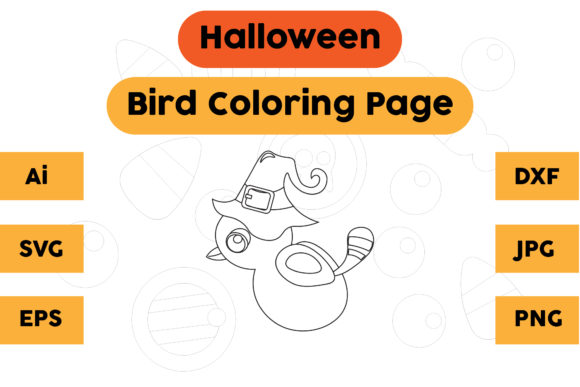
When I first opened the Halloween Coloring Page - Bird 03 file, my immediate thought was, "This isn't just a coloring page." The graphic has a certain illustrative charm that translates perfectly into an embroidery concept. It’s whimsical without being overly cartoonish, and that delicate, spooky bird perched on its branch carries a mood that’s perfect for seasonal projects—not overtly scary, but gently atmospheric. This is a design that feels crafted for a handmade touch.
The Shape of a Good Embroidery File
As a designer reviewing files for real-world stitching, my first check is always the overall layout and line clarity. This bird design, with its open, clean lines and well-defined shapes, is an excellent candidate for conversion to an embroidery file. The areas are distinct enough to allow for clear satin stitch borders or clever fill stitch choices for the body. I immediately pictured it stitched onto a child’s autumn sweater or a cozy pillow cover. The size, based on the provided canvas dimensions, suggests it would work beautifully in a mid-range hoop size, giving you plenty of room for detail without becoming overwhelming on smaller items like caps or baby clothes.
Where This Design Finds Its Home
Let’s talk about a real scenario. I’m considering a custom order for a boutique: a set of embroidered tote bags as seasonal gifts. Halloween Coloring Page - Bird 03 strikes that balance between holiday-specific and year-round appeal. A customer might buy that tote in October but continue using it well into fall because the design is more "autumnal bird" than "Halloween monster." That’s a key value for small business merchandise—it extends the product’s life. For Etsy sellers or craft fair products, this kind of design adds a layer of subtlety that can differentiate your work from more generic holiday graphics.
Other natural fits include aprons, kitchen towels, and tea towels for a haunted kitchen vibe, or even nursery decor for a family that loves a milder Halloween aesthetic. The design’s personality is its greatest asset; it feels like a storybook illustration waiting to be stitched.
Navigating the Practical Stitching Considerations
No design review is complete without the practical warnings. While the open lines are a strength, they require attention when stitching. On textured fabrics like certain sweaters or stretchy fabric like t-shirts, you’ll need a robust stabilizer to keep those fine branch lines from puckering. The small details, like the bird’s feet and the fine ends of the branches, demand a careful digitizing process—if your machine embroidery design file has too high a stitch density in these tiny areas, they could become stiff and brittle.
I would advise against using this on very dark fabric without a thorough test. The design, originating from a coloring page, likely relies on its line art to define the shape. On a black background, you’d need to choose thread colors that pop and potentially alter the fill areas to ensure the bird doesn’t get lost. Similarly, on curved surfaces like caps, the longer, horizontal branch might need slight adjustment to fit the contour without distortion.
For products destined for frequent washing, like baby embroidery on a blanket or a custom apparel sweatshirt, ensuring the stitches are secure and the trim threads are properly finished is paramount. This isn’t a throwaway graphic; it’s a finished product that should last.
How Embroidery Elevates the Graphic
Moving from a digital design asset to a physical stitch changes everything. When this bird is rendered in thread, its value shifts from a digital embroidery file to a tactile art piece. That transition boosts product value and customer trust. A client sees not just a Halloween image, but a carefully executed handmade product. For creative entrepreneurs, this enhances brand consistency if your shop specializes in elegant, nature-inspired holiday work. It becomes more giftable, more professional, and simply more engaging as a physical object than as a screen image.
Notes From the Hoop: A Designer’s Checklist
Before you commit this design to a client’s project or your next small shop product, here’s my practical workflow.
First, always test on scrap fabric. Use the same material you intend for the final product. This reveals how the fabric texture interacts with the design’s detail level.
Check your thread color contrast. Play with different palettes—maybe a traditional black and orange for Halloween, or a muted grey and cream for a more subtle fall look. The design is versatile.
Review the final stitch density in your embroidery file. Since the original is a Graphics file from the Coloring Pages Amp category, the digitizer’s interpretation is crucial. Ensure small areas aren’t over-packed with stitches.
Confirm your hoop size. The 1920px x 1280px canvas suggests a good proportion, but physically measure the intended output on your machine.
Inspect the small details in a stitched sample. Are the bird’s features clear? Do the branch ends look clean?
Test it in black and white mockups. This helps visualize it on both light and dark backgrounds and is excellent for printable mockup previews in your Etsy listings.
Use proper stabilizer. I repeat this because it’s the number one reason for failings in commercial embroidery projects.
Finally, and most importantly, check the licensing terms provided with the file. The availability of AI, EPS, SVG, DXF, JPG, and PNG files is great for flexibility, but you must confirm whether your use for personalized gifts, custom apparel, or selling as embroidered patches is covered. Never assume.
The Final Impression: A Design Worth Stitching
Halloween Coloring Page - Bird 03 surprised me with its potential. It moves beyond its digital origins to become a lovely framework for embroidery. Its mood is right, its shape is stitch-friendly, and its application range—from holiday gifts to everyday boutique branding—is broad. With careful preparation, proper digitizing, and attention to the practicalities of fabric and thread, this design can become a standout element in your craft business or a cherished personalized gift. It reminds us that sometimes, the best embroidery projects start not with a complex schematic, but with a simple, evocative line waiting to be filled not with color, but with craft.